Herbal Deep Dive: Hibiscus (Hibiscus sabdariffa)
I grew up enjoying this tea year round but especially during the holidays, when many English-speaking Caribbean islands prepare a hibiscus-based beverage called sorrel. It combines Hibiscus sabdariffa calyxes with spices to create a cold, refreshing, beautifully red drink that is sometimes mixed with rum. After all, it is a celebratory time.
Hibiscus is in the Malvaceae (mallow) family, along with okra, jute leaves, cotton, cacao, baobab, and kola nut. Sidenote - I plan to write about the Black diaspora’s relationship with this plant family one day because wow. There are many species of Hibiscus plants and they all have the same mucilage quality that is so reminiscent of mallow family plants. However, Hibiscus sabdariffa is the only species with the red calyx that is used as tea. The flowers can be many colors, ranging from white to yellow to various shades of pink.
Originally from West Africa, hibiscus sabdariffa is sour, astringent and cooling to the 2nd degree, which helps to regulate body temperature. It is anti-inflammatory and a refrigerant, which makes sense considering the warm, tropical environments this plant thrives in. The Earth always knows what you need.
Hibiscus generally has a very clearing property. It creates movement and flow in the body, particularly in the digestive, reproductive, circulatory, and respiratory systems. It can cool and soothe tissues in these systems, including the stomach, uterus, heart, and lungs, respectively. It can also cool and soothe irritated tissues in these systems.
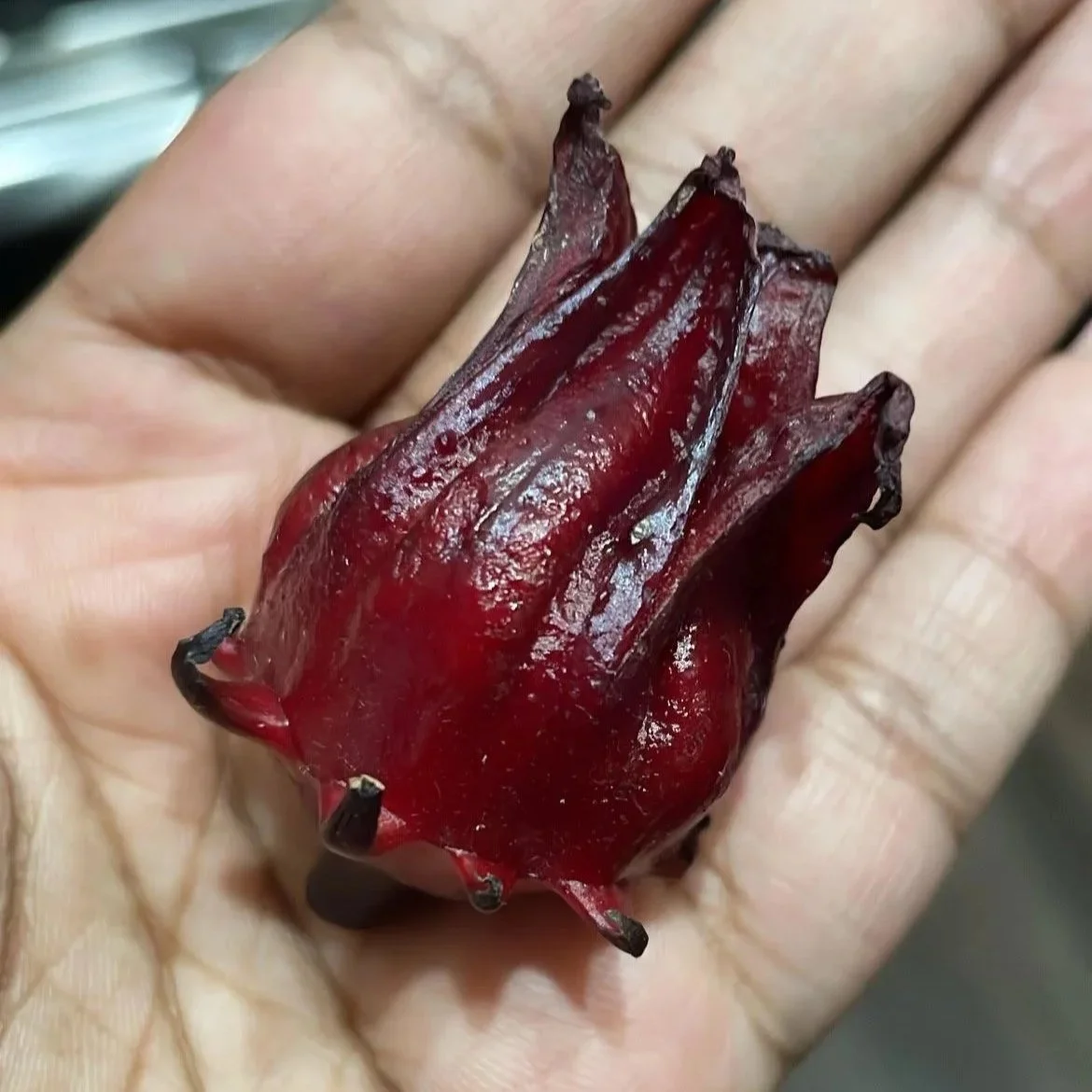
Hibiscus sabdariffa calyx
The fiery red color indicate high anthocyanin and antioxidant content. That and its diuretic property make hibiscus ideal to support circulatory system concerns like hypertension. It can create movement and flow in the reproductive system by helping to regulate flow and relieve menstrual cramps. I’ve had friends and former clients use strong brews of hibiscus to jumpstart sluggish or delayed menstruation. The high vitamin C content can support the immune system.
Food wise, the natural pectin in fresh calyxes make it idea for making chutneys and jams. Like okra, the seeds can be used as a coffee substitute. In parts of Mexico, the calyx is used in savory fillings for meat-free tacos.
I mentioned earlier that hibiscus can support the respiratory system. The mucilage in fresh hibiscus make it soothing for sore throats or a throat that is irritated from coughing. Hibiscus can move mucus in the lungs and help with coughs, the common cold, and general congestion in the upper respiratory tract. Between this and the high vitamin C content, I decided to develop a sorrel cough syrup recipe a while back that is a delicious daily preventative, an healing remedy during sickness, and a nice addition to tea, sparkling water, or even liquor on a warm day. After all, I always have hibiscus on hand so I might as well find other ways to use it, right?
This plant is deeply ancestral for many diasporas but Black people in particular. It’s a plant that we carried with us as we left the African continent both unwillingly and willingly. It’s plant that descendants still honor and revere through “red drink” when the hibiscus calyces aren’t within reach. I think that’s beautiful.
With love,
Rebecca
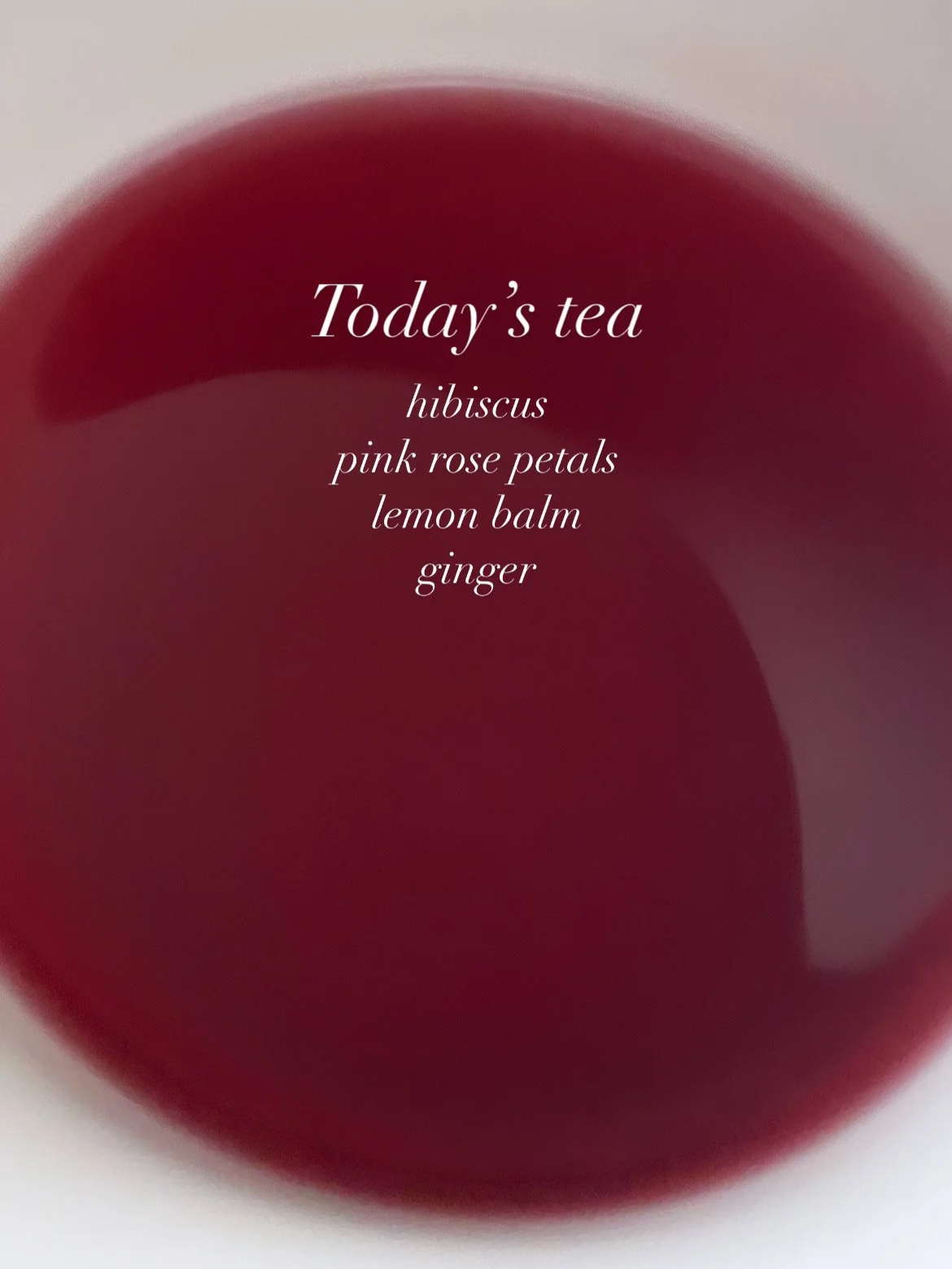
One of my many daily tea blends that I share on IG
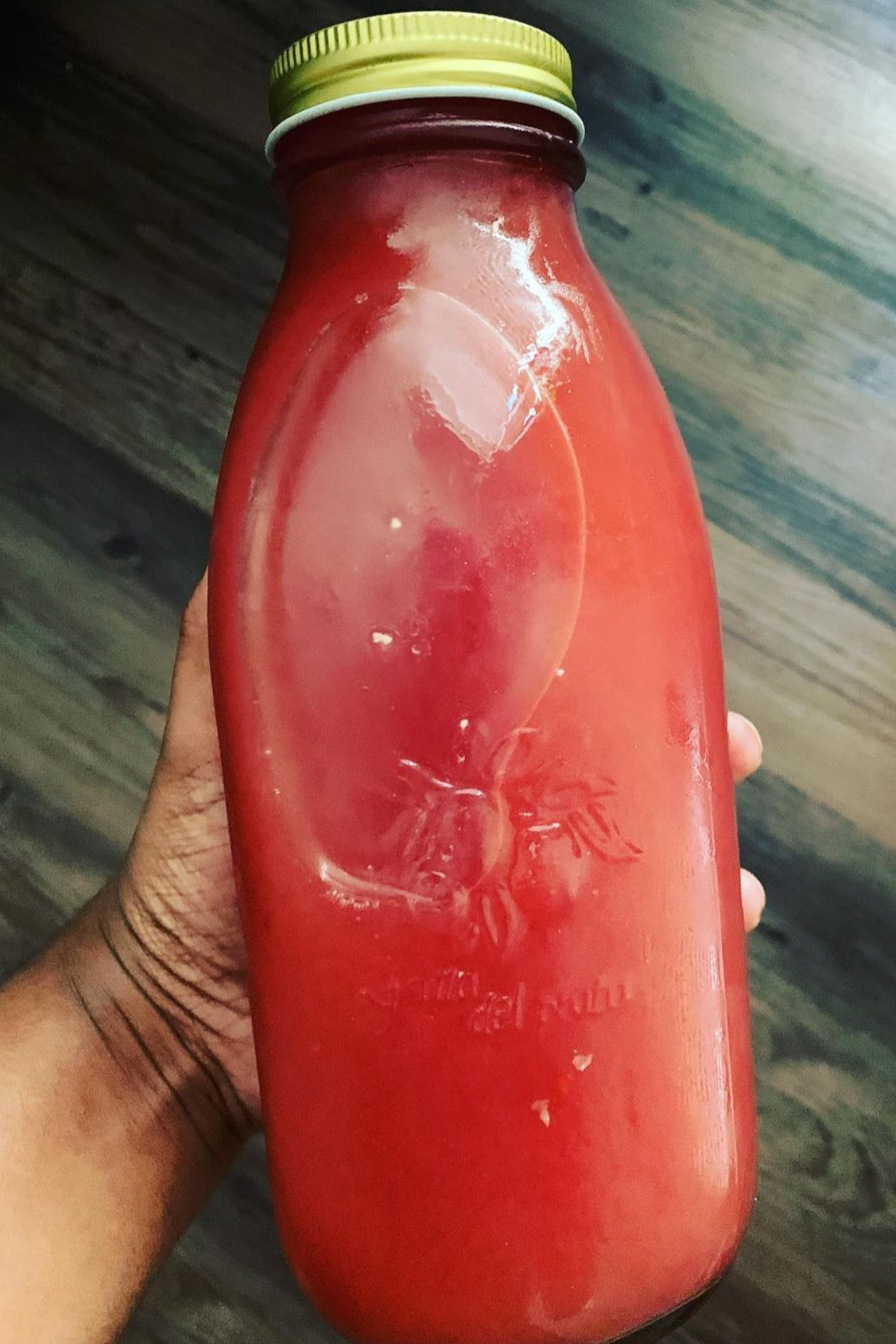
Rose hibiscus watermelon juice
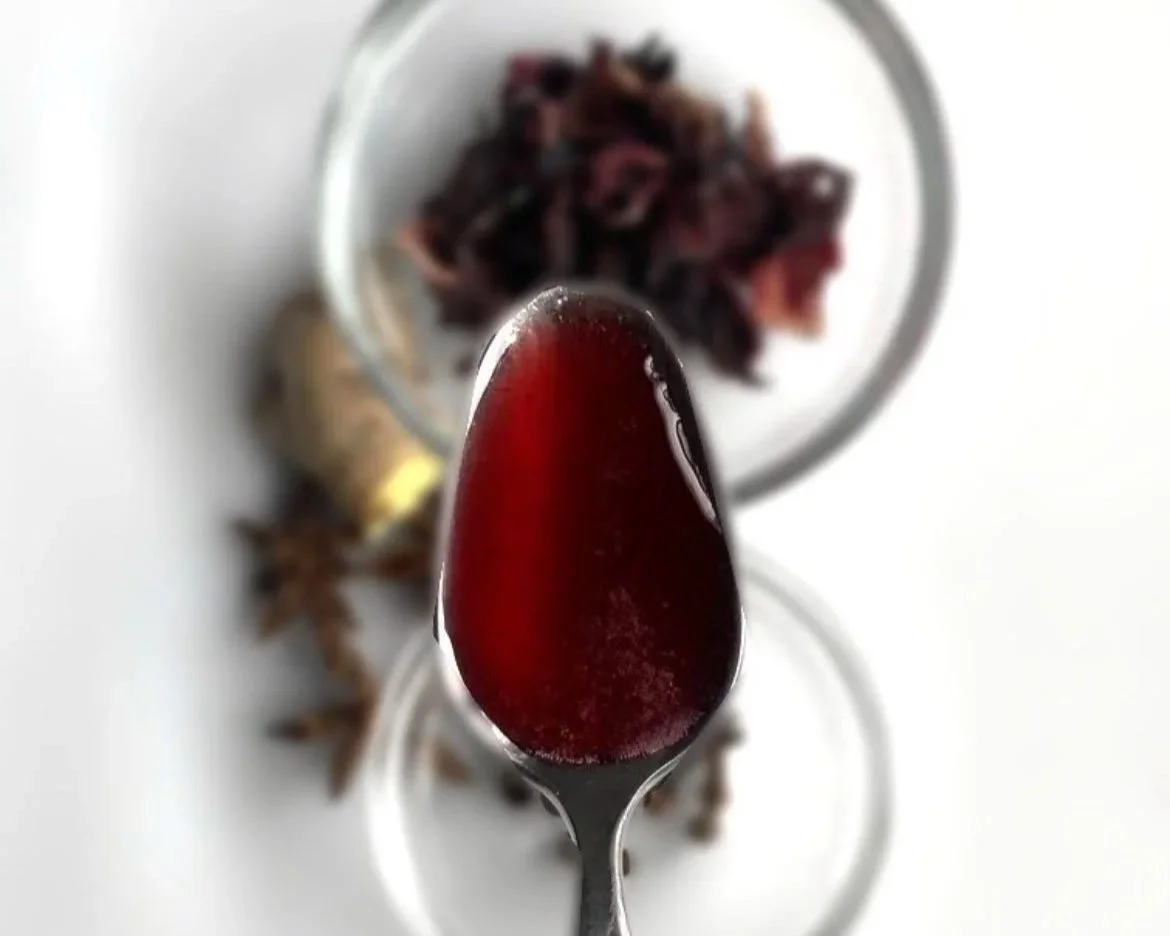
Sorrel cough syrup