Herbalism Terminology 101
Herbalist lingo doesn’t always translate well to mainstream speak. So when a bunch of herbalists start using words like infusion, decoction, true tea, herbal tea, etc., it can seem a bit confusing to people from the outside looking in. Here’s a quick breakdown. I’ll keep adding to this as I continue to write new posts that introduce new terms.
Constituent: A chemical molecule in a plant.
Compress: A cloth soaked in herbal tea and applied topically to wounds, rashes, sore muscles, sprains, etc.
Electuary: An herbal preparation made by combining powdered herbs with honey to form a thick paste or ball.
Elixir: An herbal preparation that contains a tincture mixed with a sweet base.
Herbal Syrup: An herbal preparation that combines infused honey with herbal tea. The honey can mask the flavor of strong herbs and add extra micronutrients.
Herbal Tea: Made with herbs, spices, roots, flower, bark, basically anything that isn’t the tea plant. The following categories are considered subcategories of herbal tea:
Decoction: Made by simmering tough plant material (seeds, spices, bark, etc) in water for 20-30 minutes. This is ideal for herbs like star anise, cinnamon, dried elder berries, oat straw, dried burdock root and dried hawthorn berries.
Herbal Infusion: Made by steeping herbs, spices, flowers in water for 30 minutes to 4 hours. This can be done with hot water or cold water for a “cold brew”.
Overnight/nourishing Infusion: Made by steeping plant material for 8 hours or overnight. This is considered the best way to extract nutrients from plants like nettle and dandelion and aromatics from plants such as lemon balm and spearmint. This can be done with hot water or cold water for a “cold brew”.
Hydrosol: An herbal preparation produced by steam distillation. It is the byproduct of essential oil distillation.
Infused oil: An herbal preparation made by steeping herbs in a carrier oil.
Liniment: A tincture that is rubbed into the skin.
Macerate: The act of steeping herbs in alcohol, oil, water, or other liquids.
Oxymel: An herbal preparation that combines infused or plain honey with infused vinegar.
Poultice: An herbal preparation that is made by combining chopped or ground up fresh herbs and a warm liquid to make a paste for topical application.
Salve: An herbal preparation made from infused oil and beeswax for topical application.
Solvent or menstruum: The liquid being used to make an herbal preparation, usually water, liquid, honey, oil, or vinegar. These liquids can dissolve and remove chemical constituents from plants and extracting them into the liquid solution.
Steam: A mass of crushed or mashed herbs applied to an area of the body.
Succus: The expressed juice of fresh plant material.
Tincture: A concentrated herbal extract made by macerating herbs in alcohol.
True Tea: Made with the actual tea plant, Camilla sinesis. This includes black tea, green tea, and white tea. This is what many people consider to be true tea since it is the name of the plant. This tea steeps in water for no more than a few minutes to prevent it from become too bitter.
Hope that clears things up :)
With love,
Rebecca
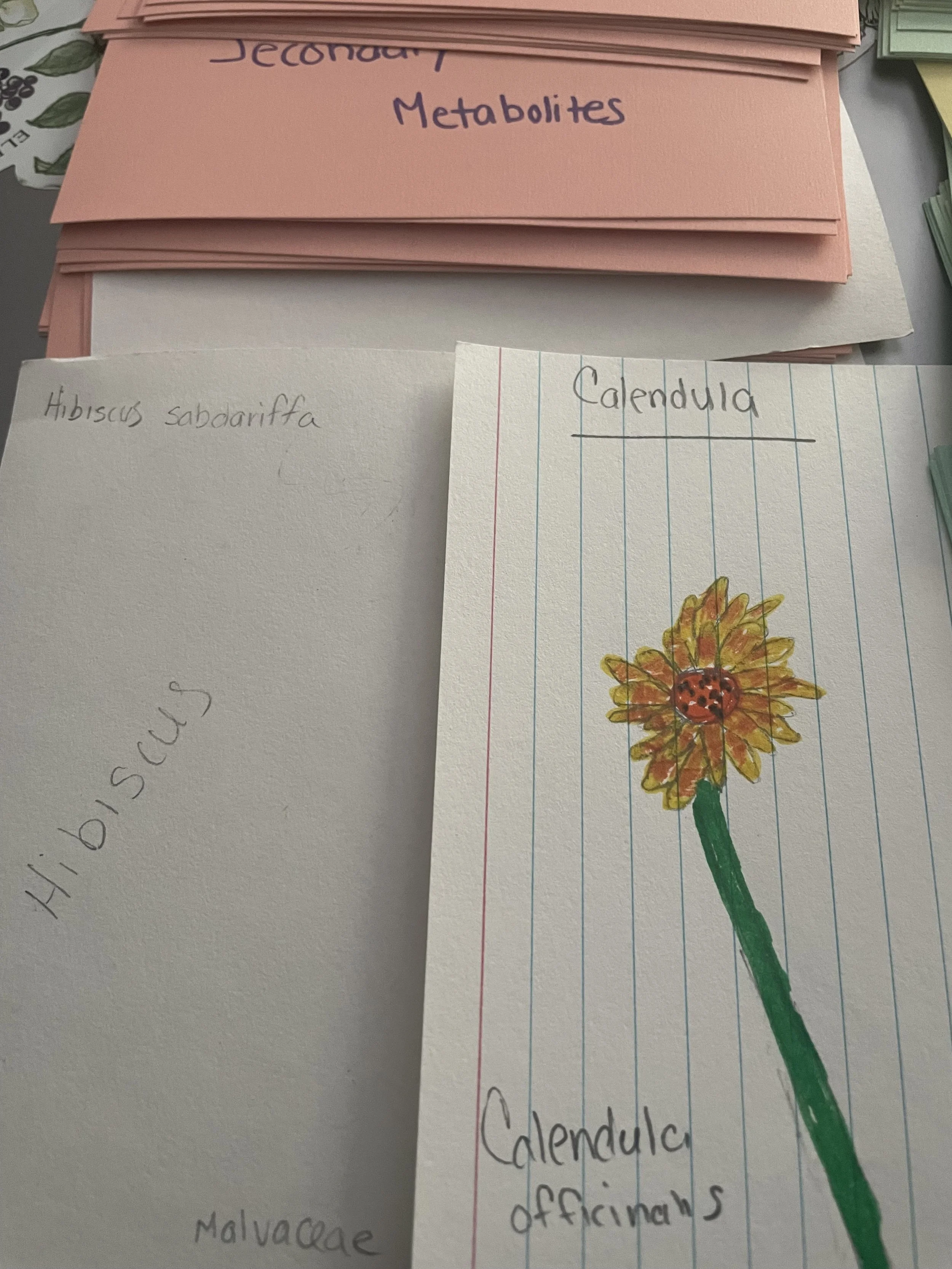
A few of my many flashcards that I’ve used over the years to study for biology, herbalism, my nutrition certificate. and my health and wellness coaching program
Plant Actions:
Adaptogen: An herb that supports the body in resistance to external stressors and the body’s ability to adapt to change.
Analgesic: An herb that helps to ease pain.
Anticatarrhal: An herb that thins and promotes the flow of mucus.
Antimicrobial: An herb that aids the body in destroying or resistance pathogens.
Antioxidant: An herb that can inhibit the oxidation and free radical damage of important membranes and tissues.
Antispasmodic: An herb that relaxes muscle spasms and tension.
Aphrodisiac: An herb that increases sexual desire. This can occur by supporting the cardiovascular system, the Genito-urinary system, and/or the nervous system.
Aromatic: An herb rich in volatile oils, often associated with a fragrant aroma.
Astrigent: An herb that causes tissues to contract.
Bitter: An herb with a bitter taste that stimulates the release of digestive secretions.
Carminative: An herb that aids the body in expelling gas, easing bowel distress, and soothing stomach discomfort.
Demulcent: A mucilaginous herb that soothes irritated or inflamed tissues and mucous membranes.
Emmenagogue: An herb that stimulates menstruation.
Emollient: An herb applied externally to soften or soothe skin.
Expectorant: An herb that helps expel mucus from the body.
Nervine: An herb that affects the nervous system.
Nutritve: Mineral- and vitamin-rich herbs that are commonly eaten as foods or used in overnight infusions.
Refrigerant: A plant that cools the body and eases fever.
Sedative: An herb that encourages sleep.
Tonic: An herb that strengthens the body or body part through a general tonifying effect.