What exactly IS a tincture??
The first time I mentioned a tincture to one of my best friends, she said “Oh like cannabis?”
Now, I’m no stranger to #that but since then, I’ve realized that many people only associate the word ‘tincture’ with cannabis since that is a common way to ingest THC without having to smoke or eat something sweet. They don’t full understand what a tincture is, so they don’t realize that a tincture can be made with any plant, not just cannabis.
So let’s back up a bit. What exactly is a tincture?
A tincture is a type of herbal preparation that requires the steeping (infusing) of plant material in alcohol for 4-6 weeks. Alcohol is used when an herbalist wants to extract plant constituents that are soluble in alcohol, including acids, alkaloids, bitter compounds, flavonoids, resins, tannins, volatile oils and SOME vitamins and minerals (more on that later). The most commonly alcohol used for tinctures are grain alcohol, vodka, rum, and brandy. Tinctures are not to be consumed like alcohol - that is, it’s not recommended to take shots of tincture like you might do with tequila. A well made tincture is VERY potent and quickly absorbed into the bloodstream, so between that and the high alcohol content, you usually only need 10-30 drops per dose, depending on the plant and health concern.
You can use dry plant material or fresh plant material to make a tincture, but they are prepared differently. Dry plant materials has been dehydrated, meaning little to no water. Because of this, most dry plant tinctures use 50-60% alcohol. On the other hand, fresh plant material is “juicy” and full of water. After sitting in alcohol for 4-6 weeks, fresh plants will release a lot of water into the mixture, diluting the preparation. This is a problem for two reasons:
A diluted tincture means that the alcohol percentage is likely too low for an effective extraction.
Diluting alcohol with water encourages bacterial growth. If the alcohol percentage isn’t high enough, bacteria will grow in the container, which will spoil the herbal preparation. The final alcohol percentage after infusing the plant material into alcohol needs to be at least 25%. For example, if using fresh plant material and brandy (which tends to be about 50% alcohol), the water in the plant will throw off the alcohol percentage and the alcohol won’t properly preserve the tincture (as mentioned in point #1) or extract the desired plant constituents. To prevent this, herbalists will use high proof grain alcohol for most fresh plant tinctures (75% or higher) because you can essentially treat it as 100% alcohol. That makes it a lot easier to make a tincture!
After it sits for 4-6 weeks, the plant material is strained and the remaining liquid is bottled. A tincture can last about 2 years or longer if stored properly and does not need to be refrigerated. If the alcohol percentage is high enough, the bottle is sterilized before bottling, and you use a dark-colored jar or bottle, a tincture can last up to 4-5 years.
Herbal tinctures are the basis for other herbal preparations, including elixirs (tincture + honey), liniments (tinctures for topical use), and wound washes (tinctures diluted with water for first aid support). But all these additional preparations rely on a well-crafted tincture as a first step.
A common question I get a lot is, how do you know when to use alcohol vs other solvents? And the answer is, it depends on what you want your herbal preparation to do. For example, if you want an herbal preparation that extracts minerals and vitamins from a plant for nutritional support, water or vinegar would be better options. A tincture can extract a handful of minerals and vitamins, but an overnight infusion in water is your best bet when it comes to efficient extraction of nutrients from plants. As mentioned above, alcohol is great for extracting bitter compounds, resins, and volatile oils. Which is why herbal bitters tend to be alcohol based - because that is one of the best ways to get the bitter constituents out of the plant and into the liquid itself for consumption. In the case of cannabis, alcohol is used to extract terpenes (volatile oils) and cannabinoids (like THC and CBD) which are the plant constituents that cause the “high” effect in the body. Some people prefer the tincture to smoking because there is less smell, less clean up, minimal impact on the lungs, and more precise dosing.
Another question I get is, which plants are well suited to alcohol extraction? And again, it depends. There are thousands of plants but this is something I recommend you include in your herbal studies. When studying a plant, be sure to research which solvents work best with the plant. Here are some common plants that do well in tinctures and why:
Dandelion (Taraxacum officinale) leaf and root: Dandelion is a highly prized bitter and the nutrition profile is an added bonus.
Elder (Sambucus spp.) berry: The allkaloids, flavonoids, and tannins in this plant are proven to contain potent immune system support.
Bitter melon (Momordica charantia) leaf: As you can tell by the name, this leaf has bitter compounds which are well suited to alcohol extraction.
Calendula (Calendula officianalis) flower: A lot of the medicine in the plant lies in its resin content
Any questions? Let me know!
With love,
Rebecca
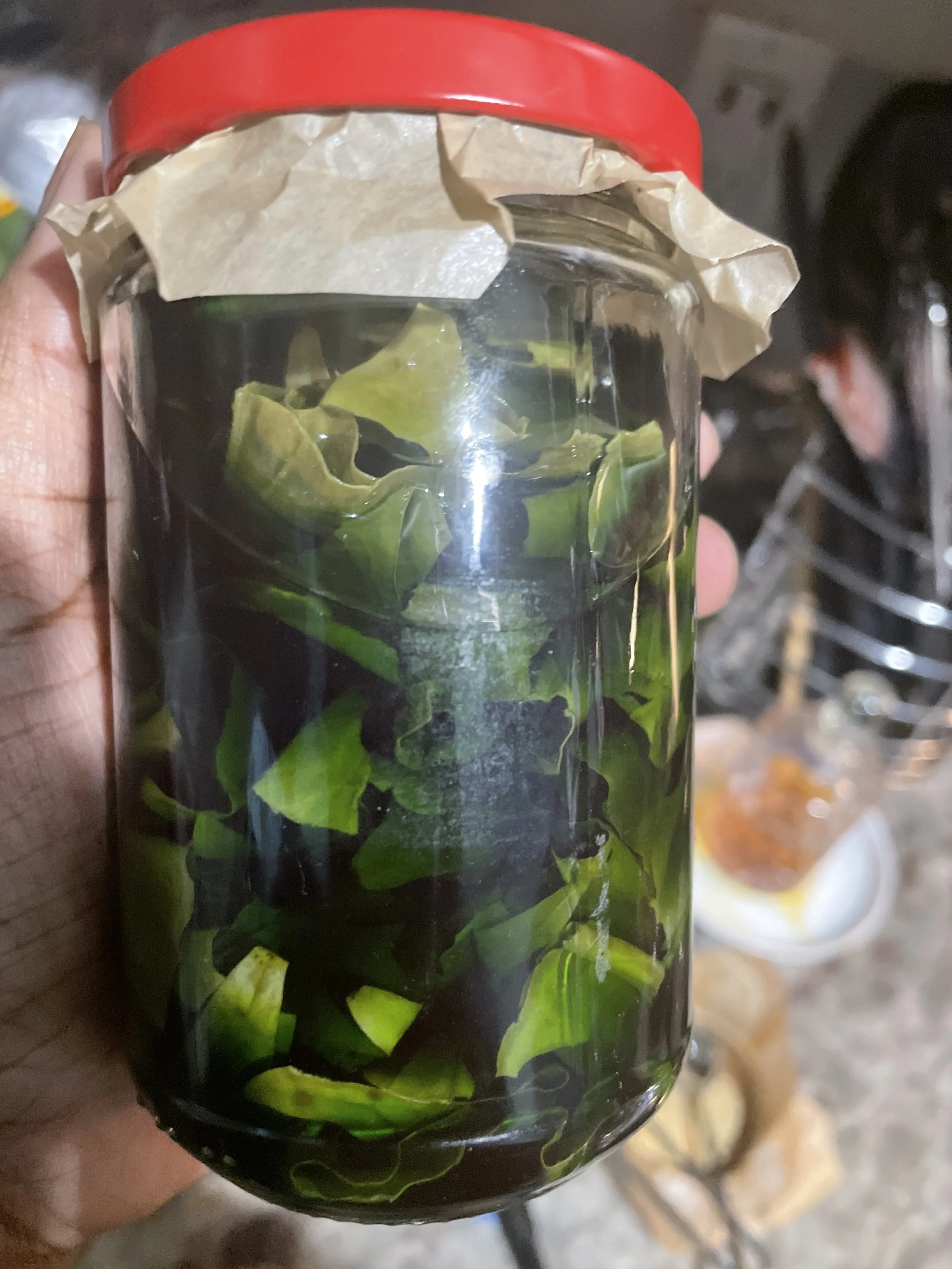
Fresh dandelion leaf tincture