Herbal Deep Dive: California Poppy (Eschscholzia californica)
Just got back from San Francisco and wow. So beautiful. And California poppies everywhere.
If you study Western herbalism in the US, you will hear about California poppy (Eschscholzia californica) at some point. It’s commonly talked about for its sedative proporties and the fact that it’s in the “poppy” (opiate) family. But what was lost on me until seeing and experiencing this plant in person, was the sheer beauty of seeing fields and front yards full of these gorgeous flowers that come in multiple colors - yellow, orange, white, and more. Just the sight of them made me happy. It was uniquely uplifting, in a way that has nothing to do with consuming the plant itself. I’ve always loved flowers and I get a fresh bouquet of local, in-season flowers a few times a month. But somehow, I left San Fran with even more appreciation for flowers and this plant specifically. No wonder California poppy has the state flower since 1903.
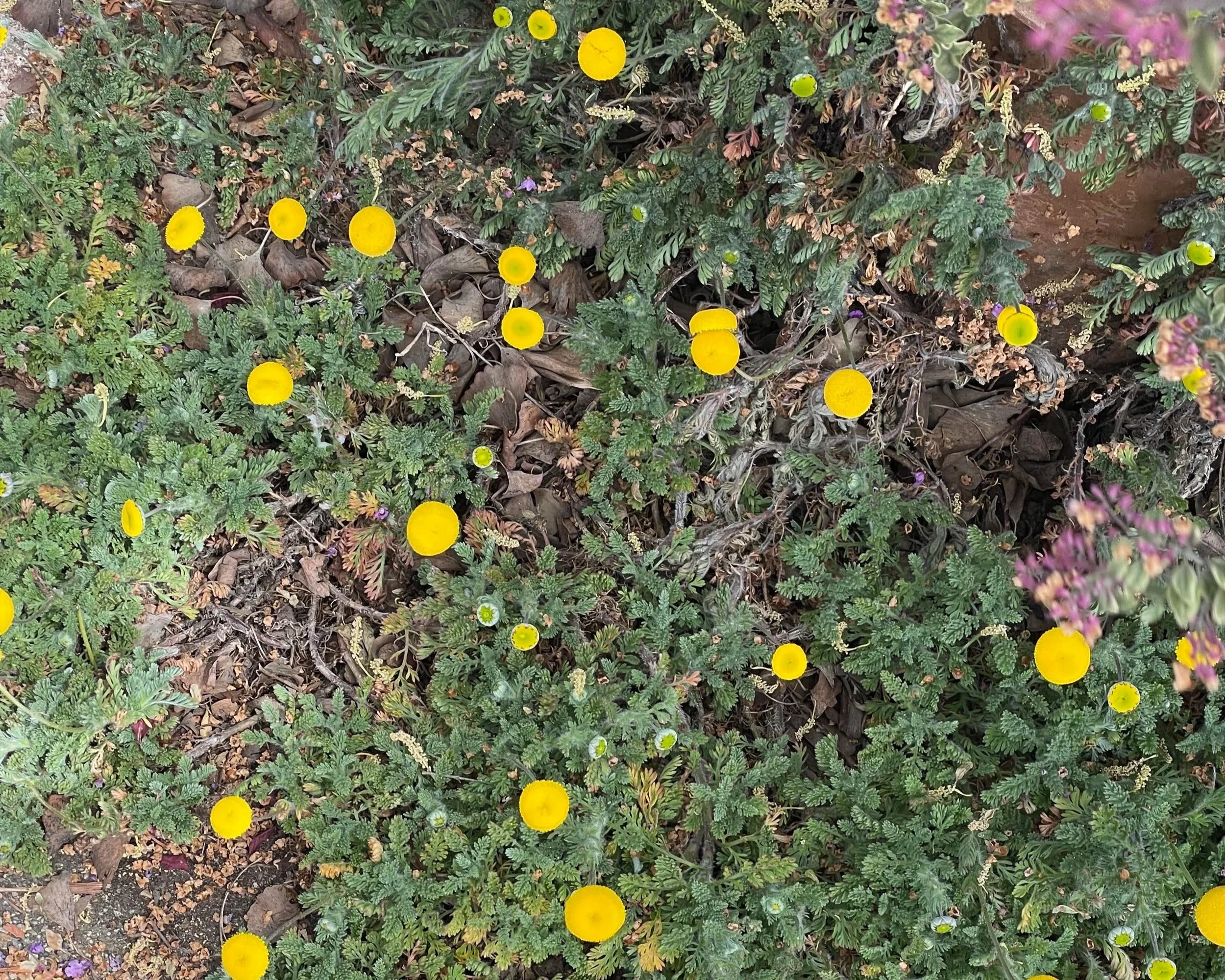
Yellow poppies
Uses
California poppy is used historically to ease sleep, encourage relaxation, or ease anxiety without potentially addictive properties. A tea or tincture of the flowers, stems, and root can help calm a nervous system in overdrive and to help soothe pain. It can be used as a pain reliever for injuries, muscular tension, headaches, and toothaches. For pain relief, the root and flower can be used internally as an infusion or topically as a poultice or wash that is directly applied on cuts, burns, and minor scrapes. When you put those things together, it tells us that this plants is especially indicated when racing thoughts or pain keep you up at night. It’s important to start with a lower dose when using this plant to gauge how its sedative properties affect you. Excessive use can lead to a “hangover” or “drowsy” effect the next day, so proper dosage is important. It shouldn’t surprise you then that California poppy is associated with the Moon. Consider using to support dreamwork or to help you sleep during those Full Moons that keep your mind and/or nervous system racing.
The antispasmodic property serves useful for hot, dry, hacking coughs, especially in cases when coughing gets worse at night or inhibits sleep. Notice a theme yet?
The flower essence of California poppy is thought to help ground you in your spiritual connection and can be really supportive to people on a spiritual journey.
This plant is best used fresh in a tincture but as mentioned above, a fresh plant tea can also provide some relief. I’ve tried a tincture made with the dried plant and it still had some effect but not as much as a fresh plant preparation would. Ideally, you want include both the root and the flower in herbal preparations since the root has the highest alkaloid content. California poppy’s alkaloid content has been linked to most of its effect in the body.
Safety
California poppy is generally considered to be safe for children (not infants), especially children who are irritable when sleepy. Its’ sedative effects can potentially interfere with driving or operating heavy machinery when higher doses are taken or when combed with other sedatives. It’s not advised to taken while pregnant and while trying to become pregnant, since one of the alkaloids found in the herb can stimulate the uterus. Lastly, California poppy can have opposite effects in people who are taking hormones for gender transition or menopause. Do not use with alcohol or other depressants.
With love,
Rebecca
California poppies are native to the western part of the American continent, from parts of Mexico all the way up to Washington state. It has a deep history among Indigenous groups in California, including the Pomo and the Yuki peoples.
Botany
California poppy flowers can be annuals or short-lived perennials depending on the area. They have four petals and are very responsive to light, meaning they tend to close up on cloudy days (as seen above). They can grow to be up to 2 feet tall. When mature, the seed capsules can burst, sending seeds up to 6 ft away. That explains how quickly these beautiful flower can spread each year if seeds aren’t hand collected before bursting.
Plant Actions
This plant is known to be mildly sedative, anti-inflammatory, analgesic, and antispasmodic, which all support its uses for sleep and various types of pain, including nerve pain. Remember, California poppy is part of the opium family so it has some similar qualities targeting pain and anxiety. However, California poppies DO NOT contain any opiods. It works through it’s ability to regulate GABA receptors in the brain which allow the plant to encourage calmness. Additionally, poppies can be very uplifting, helping us to remain in a better state of mind. I mean, that happens to me after just looking at them.
California poppy is also a mild diaphoretic, meaning it can encourage sweating and help break a fever, especially when accompanied by pain. It is antibacterial and can be used topically on cuts, sores, and various bacterial conditions.
Growing and Harvesting
The flowers bloom in the spring and summer so it’s best to plant in late Fall but can also be planted in the early Spring. California poppy needs full sun and are best when started from seed, either indoors or sown directly into the ground. Be sure to harvest the flowers or whole plant just as the flowers are about to go to seed.
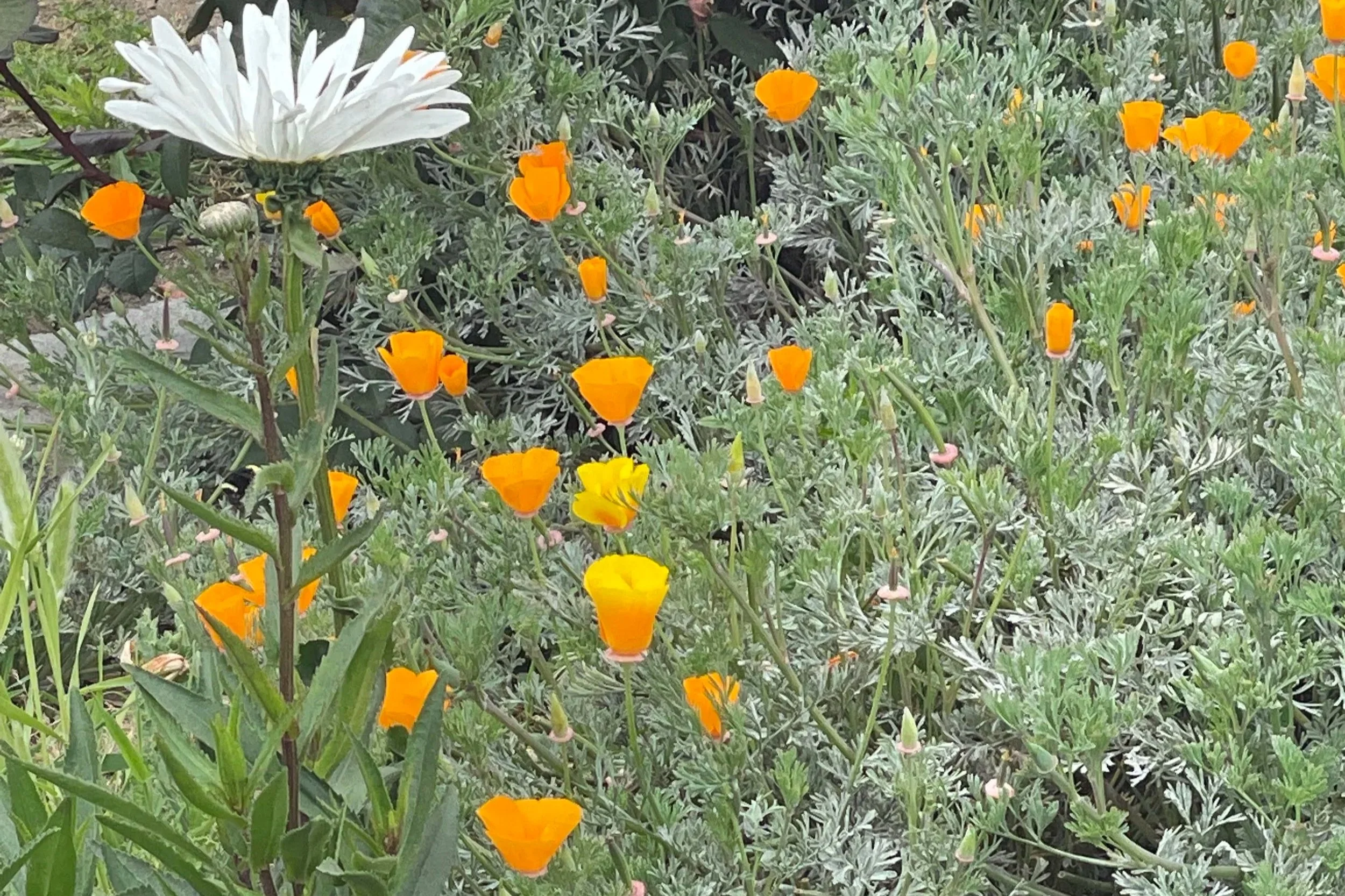
Orange Poppies
Dosage
Fresh plant tincture: Take up to 2 mL as needed or 3 times a day
Infusion: 1-2 tsp of the flower (and root if you have it) in 1 cup of water. Drink at bedtime.