Yarrow to Support Allergies
Yarrow (Achillea millefolium) is widely known for its ability to support wound healing and the fever process in the body. But several of this beautiful plant’s properties make it a great choice for someone who is struggling during this intense allergy season.
Yarrow is drying and astringent, meaning it can help tighten irritated and inflamed tissues that are releasing copious, watery secretions like watery eyes or a runny nose. For allergy support, I like to combine yarrow with other anti-inflammatory mucous membrane tonics like nettle (Urtica dioica), elder (Sambucas nigra) flower and mullein (Verbascum thapsus), all of which are anticatarrhal and known to help with the symptoms and occurrence of allergies.
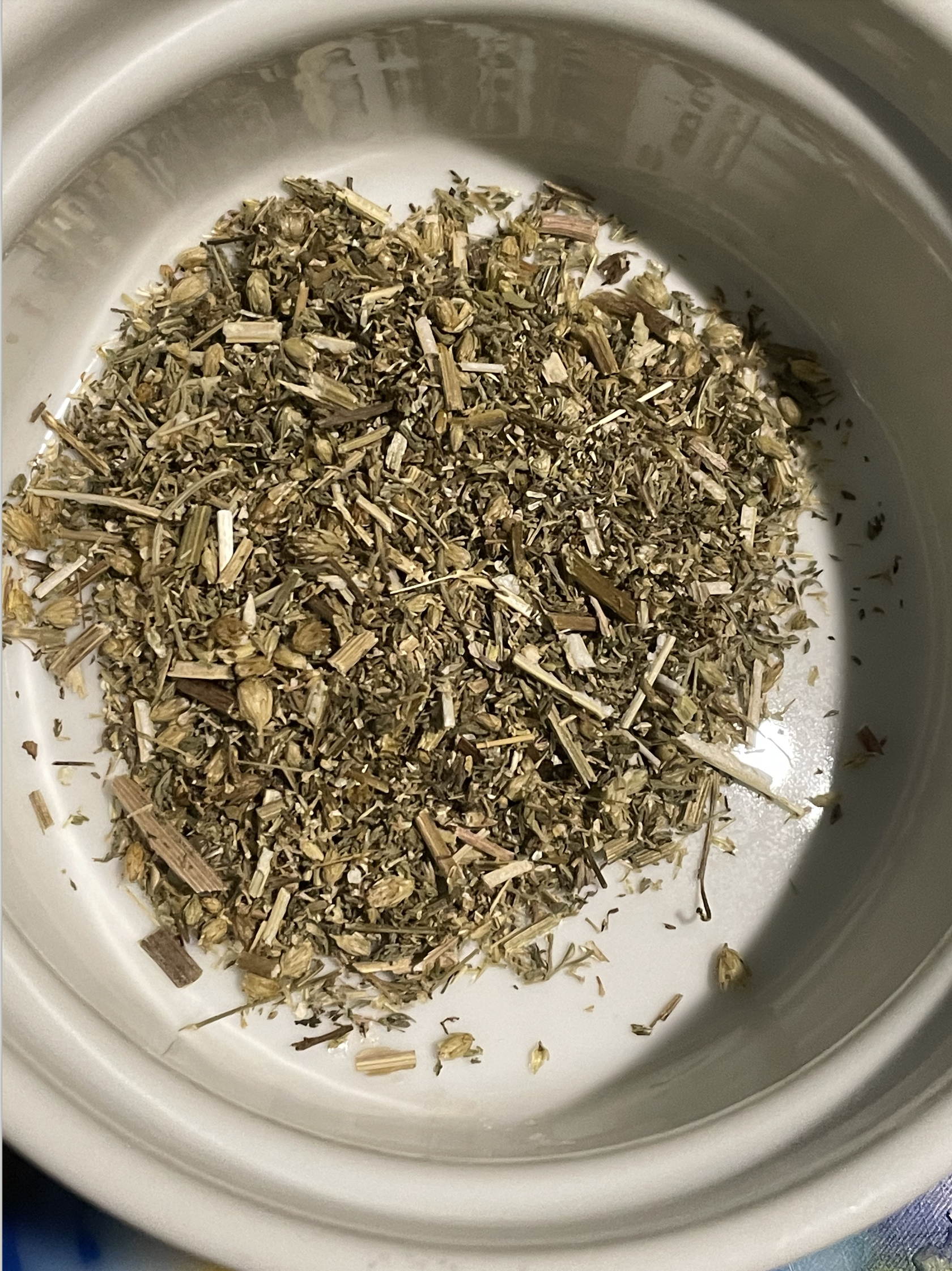
Dried yarrow
Nettle in particular can clear histamine out of the body which helps to decrease the inflammation that causes many of the allergy symptoms we experience. The combination of yarrow and nettle is great for puffy, swollen sinuses, post-nasal drips, and any other experience of fluids in the upper respiratory area in general.
Materials
1 part yarrow,
1 part elderflower
1/2 part mullein
1/2 part nettle
This is the general ratio I use for this blend. I typically use teaspoons when making a cup and tablespoons when making a quart sized jar.
Method
Mix your dried herbs together in a bowl or jar. Using freshly boiled water, cover the dried herbs with 1 to 3 cups of water and let the dried herbs steep in the hot water for at least 5-10 minutes. Strain and drink throughout the day. Add honey or your preferred sweetener to taste. \
Notes
Make a strong brew with this tea blend and drink up to a quart of it daily while experiencing allergy symptoms. Do not consume yarrow daily for more than 14 days.
With love,
Rebecca
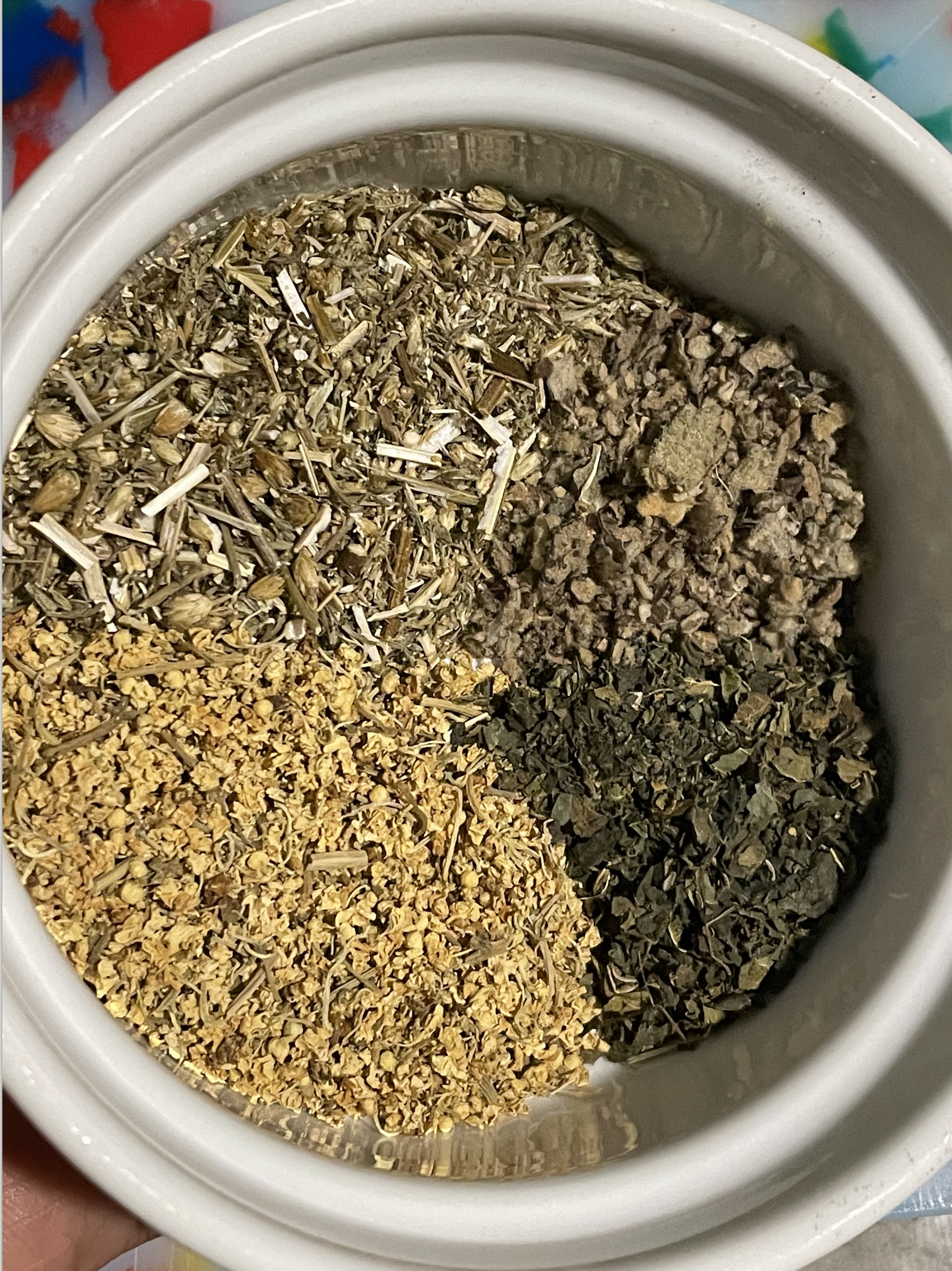
Dried yarrow, elderflower, mullein, and nettle
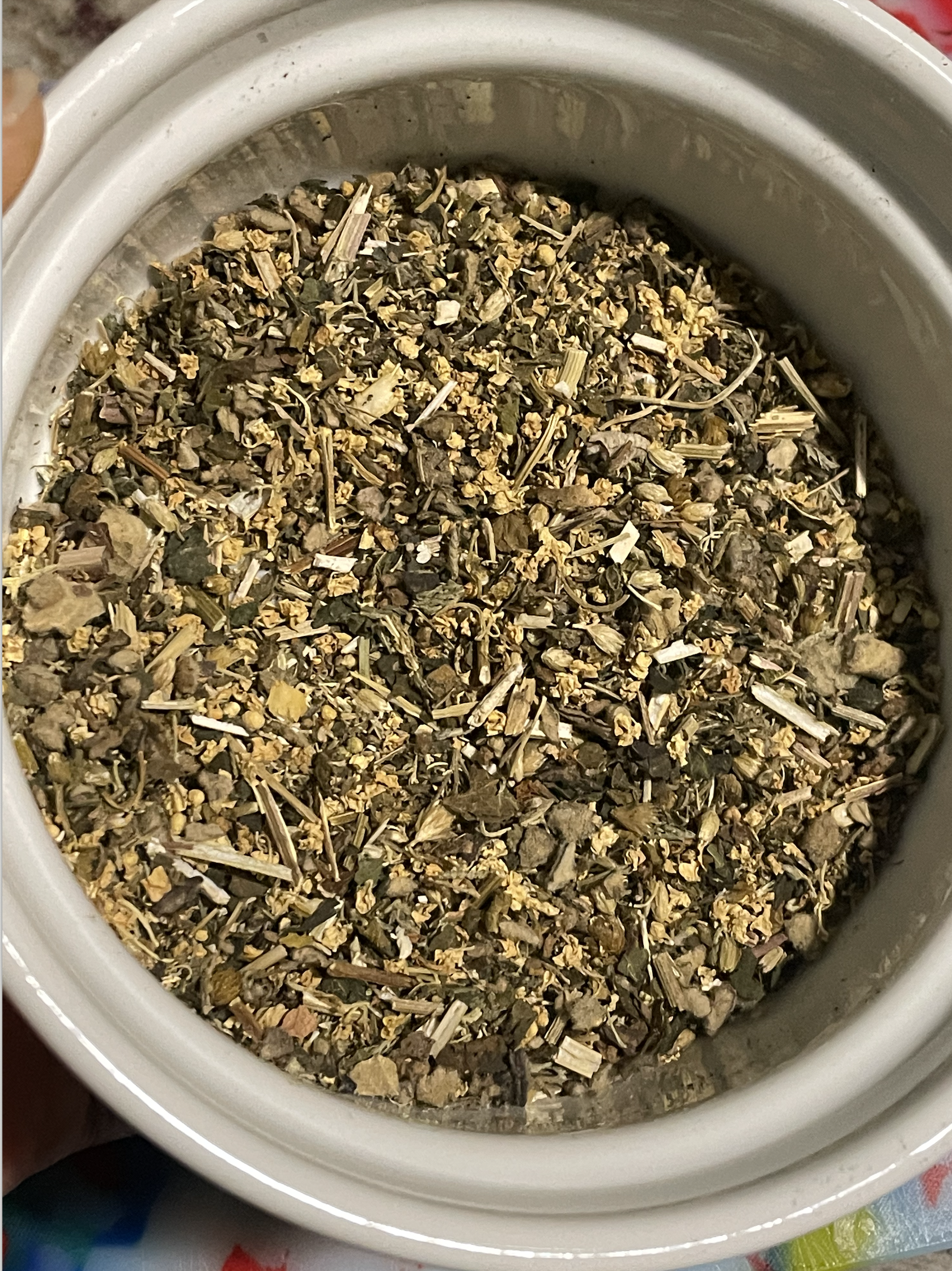
Allergy tea blend