Herbal Deep Dive: Dandelion (Taraxacum officinale)
For the past 3-4 years, I’ve been doing monthly plant studies. Each month, I study a plant in-depth, which includes tasting it, studying where and how it grows, understanding how it’s been historically used, reading scientific research and traditional knowledge about the plant, looking into contraindications, and making remedies with it. When I set my goals for the year, I usually assign a plant to each month. Sometimes, it’s a plant I’ve never used but it’s mostly been getting to know plants that I’m already familiar with on an even deeper level. I prefer to know a short list of plants very well rather than having surface level knowledge of a lot of plants.
Dandelion (Taraxacum officinale) was the March 2026 plant of the month.
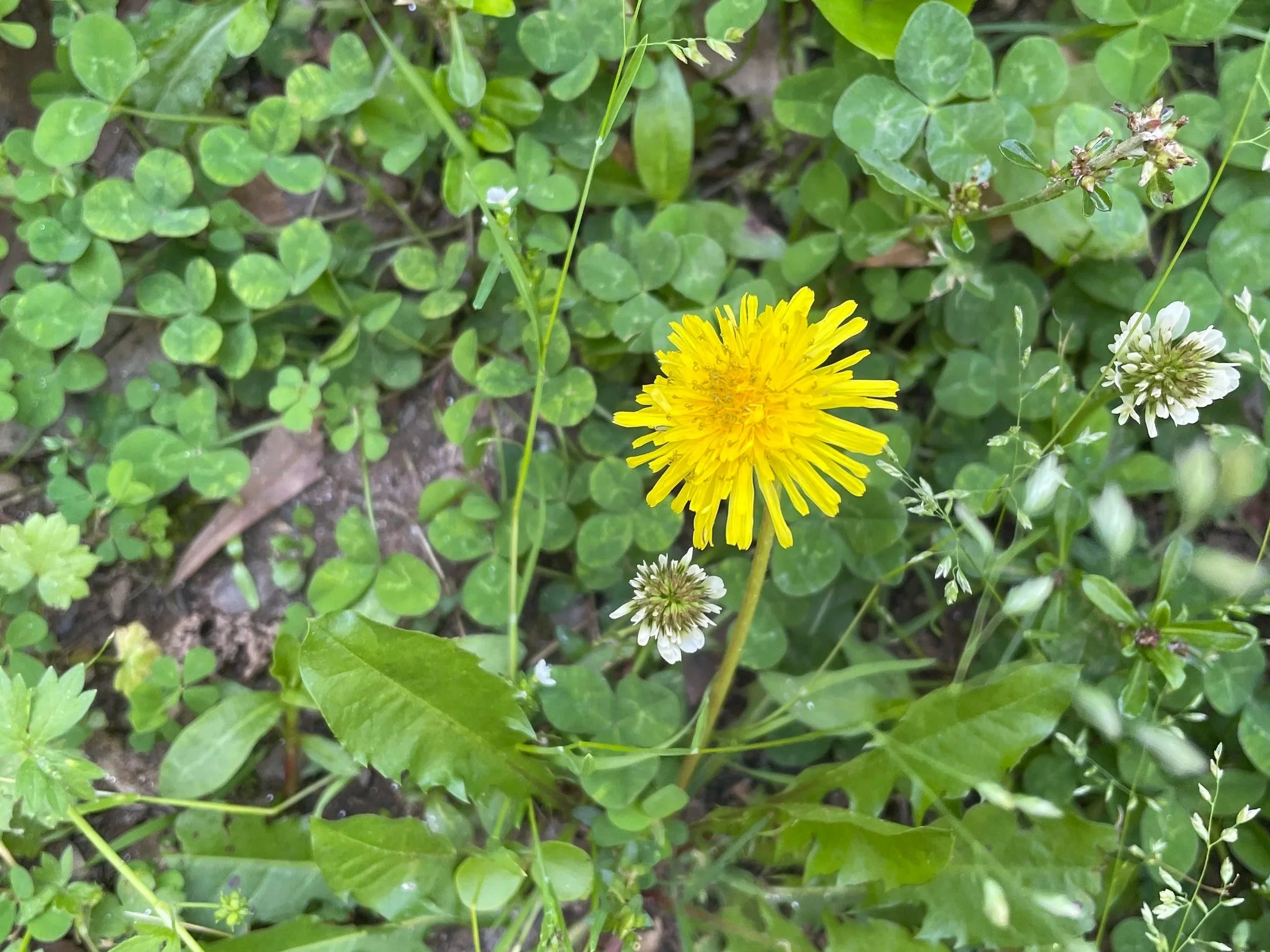
Dandelion (Taraxacum officinale) flower
Many of us grew up seeing dandelions without realizing what they were. As a kid, I thought they looked like little fuzz balls. I was always so excited to blow on them and see the pieces of “fuzz” blowing in the wind, not realizing that I was helping these flowers spread its seeds. Dandelions are everywhere - fields, meadows, lawns, gardens, in sidewalks, all over the world. The plant is highly nutritive; both the roots and leaves are high in vitamins and minerals, including iron and calcium. The yellow flowers contain beta carotene. The whole plant, including the greens have been used as food and medicine for thousands and thousands of years. They’ve only been on this continent for a few hundreds years, thought to have arrived on the Mayflower.
Dandelion is bitter, cooling and dry. That bitter taste partially explains why this plant is commonly associated with the liver and kidneys; it has a diuretic action without leeching potassium since the plant has enough potassium to counterbalance that effect.Because of this, dandelion is often cited for its ability to help with water retention and edema. Because of its impact on the liver, it’s often taken over time to support hot skin conditions like acne and eczema.
Like most roots, dandelion root is best when harvested in the Fall when the plant’s energy is no longer focused on the leaves or flowers. In addition to being a bitter tonic, a diuretic, and nutritive like the leaves, the root is also antibacterial and anti-inflammatory. Dandelion root contains inulin, which is a prebiotic that helps support gut health. When harvested in the Fall, the root can have an inulin content of up to 40%. For skin and/or liver conditions, dandelion root is often paired with burdock root, which is another nutritive root high in inulin.
The flowers, leaves, and roots can be used fresh or dry in teas, tinctures, infused oils, or in food. Dandelion root does well in powdered preparations like capsules. To get the nutritive benefits of the plants, it has to be eaten or consumed into tea. Dandelion is generally considered safe during pregnancy according to the American Herbal Products Association’s Botanical Safety Handbook. It is in the Asteraceae (daisy) family though so it can cause allergic reactions for people who are allergic to other asters like ragweed. If you have gallbladder or kidney issues, talk to your medical provider before taking dandelion. Avoid completely if you are on blood thinners or diuretics.
For a tincture of dandelion root or the leaf, take 15-20 drops 2-3 times a day. For a root decoction, boil 2-3 tsp of the root in 1-2 cups of water for 10-15 minutes. Drink that amount 2-3 times a day.
To infuse the leaves for herbal tea, steep 2 tsp of the dried leaf into 1 cup of water for 15 minutes. Drink this up to 3 times a day.
If you want to learn more about this plant and others, here are some resources I used during my plant study:
Making Plant Medicine by Richo Cech
Body into Balance by Maria Noël Groves
Wild Remedies by Rosalee de la Forêt
Spiritual Herbalism by Karen M. Rose
With love,
Rebecca
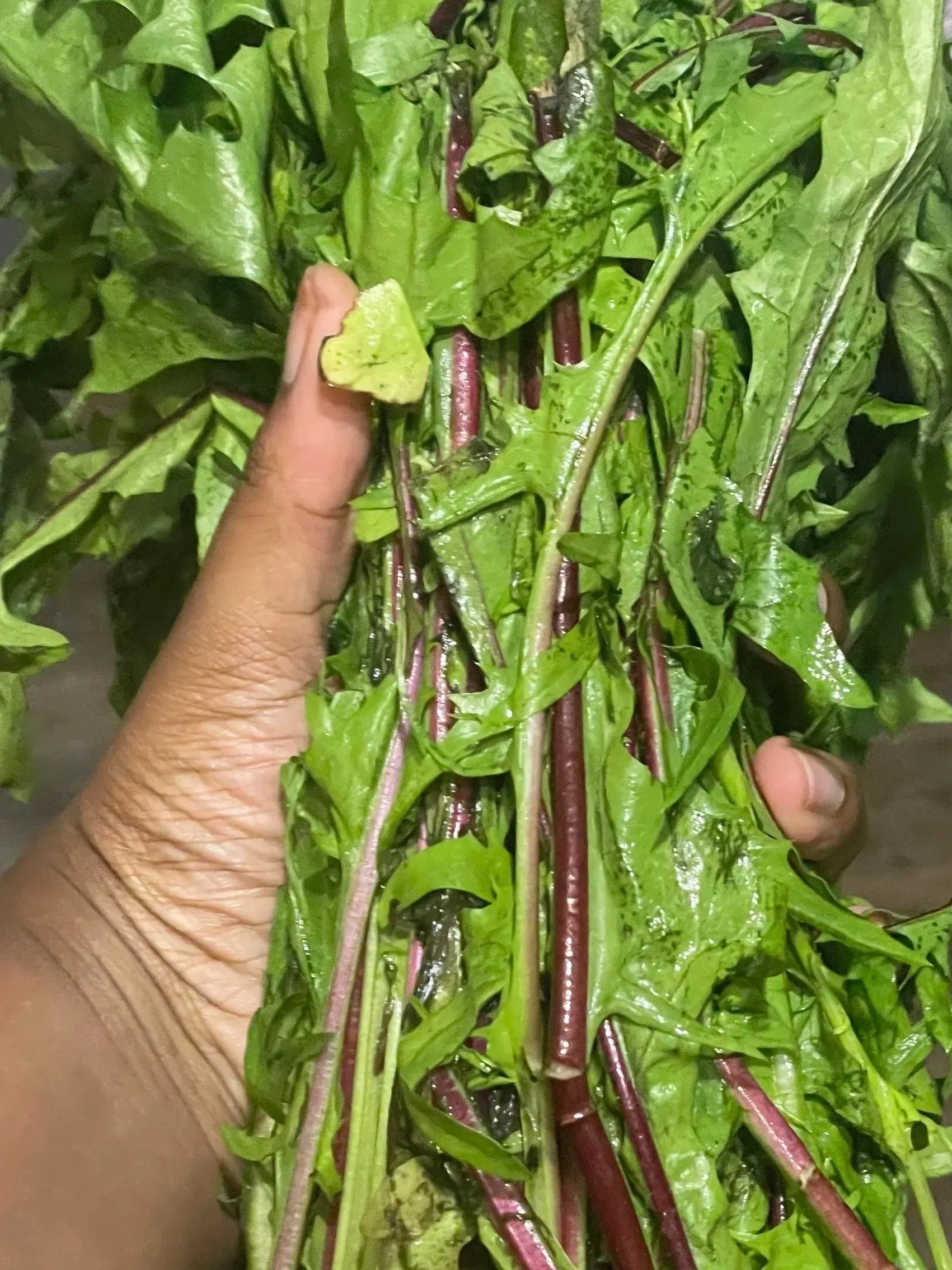
Dandelion (Taraxacum officinale) leaves
My motto is to always eat the herb when you can and dandelion greens are DELICIOUS. They are best enjoyed in early to mid-spring during the first year of growth when the leaves are still young. The younger the leaves, the less bitter they will be. Eating the greens during the springtime with stimulate the liver which is exactly what the body needs after the heavy foods eaten during the long, sluggish winter months. The leaf is a bitter tonic, diuretic and nutritive. As a bitter, the leaves help to stimulate the appetite, making it a great addition to a salad. The leaves can be steamed, used in a pesto, or sautéed with aromatics and a little vinegar like any other leafy green. Flavor wise, the greens go well with:
anchovies
avocado
beets
carrots
nuts and seeds
chickpeas
curry powder
fennel
garlic
ginger
lemon
mushrooms
mustard
onions
potatoes
tomatoes
herbs like basil, parsley, anchovies, garlic, tomatoes, mustard, onions
vinegar
The fresh root can also be eaten; the fresh, young root of dandelion can be added to soups and stir fries. Not too much though because they are pretty bitter, especially when harvested before Fall.