Fennel to Support the Digestive System
Originally published on Plant Wonder Collective’s Study Circle Patreon in September 2025
Fennel (Foeniculum vulgare) seed is a sweet, pungent, aromatic herb that eases nausea and soothes gas through its carminative and antiemetic properties. The seed is also antispasmodic, meaning it can soothe the stomach cramping that often comes with nausea and stomach upset. Fennel’s aromatic volatile oils support the digestive system by relaxing the gastrointestinal (GI) tract and therefore calming any symptoms caused by tension in the gut.
The best fennel-based herbal preparations for this purpose can include:
Food or drinks like a cordial.
Infused honey or herbal syrup, which can be helpful if there is any throat irritation from frequent vomiting.
A strong decoction or overnight infusion that can be consumed as is or used as a mouthwash if you can’t keep anything down due to nausea and vomiting.
Even just chewing fennel seeds will release those same volatile oils that drive the plant’s digestive system supportive action. Smelling the essential oil of fennel will have a similar effect.
You can have fennel seed on its own or you can boost the stomach soothing power of your preparation by pairing fennel with other GI-friendly herbs that can be used in decoctions, like cinnamon (Cinnamomum spp.), ginger (Zingiber officinale), or star anise (Illicium verum). When pairing fennel with other herbs, I like fennel to be used in a 2:1 ratio. In the following example, ginger and star anise together make up 1 tbsp of the formula and the fennel seed is double that amount.
Ingredients:
2 tbsp whole fennel (Foeniculum vulgare) seed
1/2 tbsp dried or fresh ginger (Zingiber officinale) root
1/2 tbsp star anise (Illicium verum)
12 ounces of water
Method:
Place all the herbs and water in a pot over low heat until the water begins to simmer. Let the mixture simmer about 15-20 minutes then strain before drinking.
A few things to note: If you have an allergy or sensitivity to plants in the parsley family (Apiaceae), you may experience hypersensitivity from fennel. Also, if you’re using cracked fennel seeds, which I’ve been seeing more often in stores lately, reduce the amount of fennel by at least half.
If you try this, let me know over on IG!
With love,
Rebecca
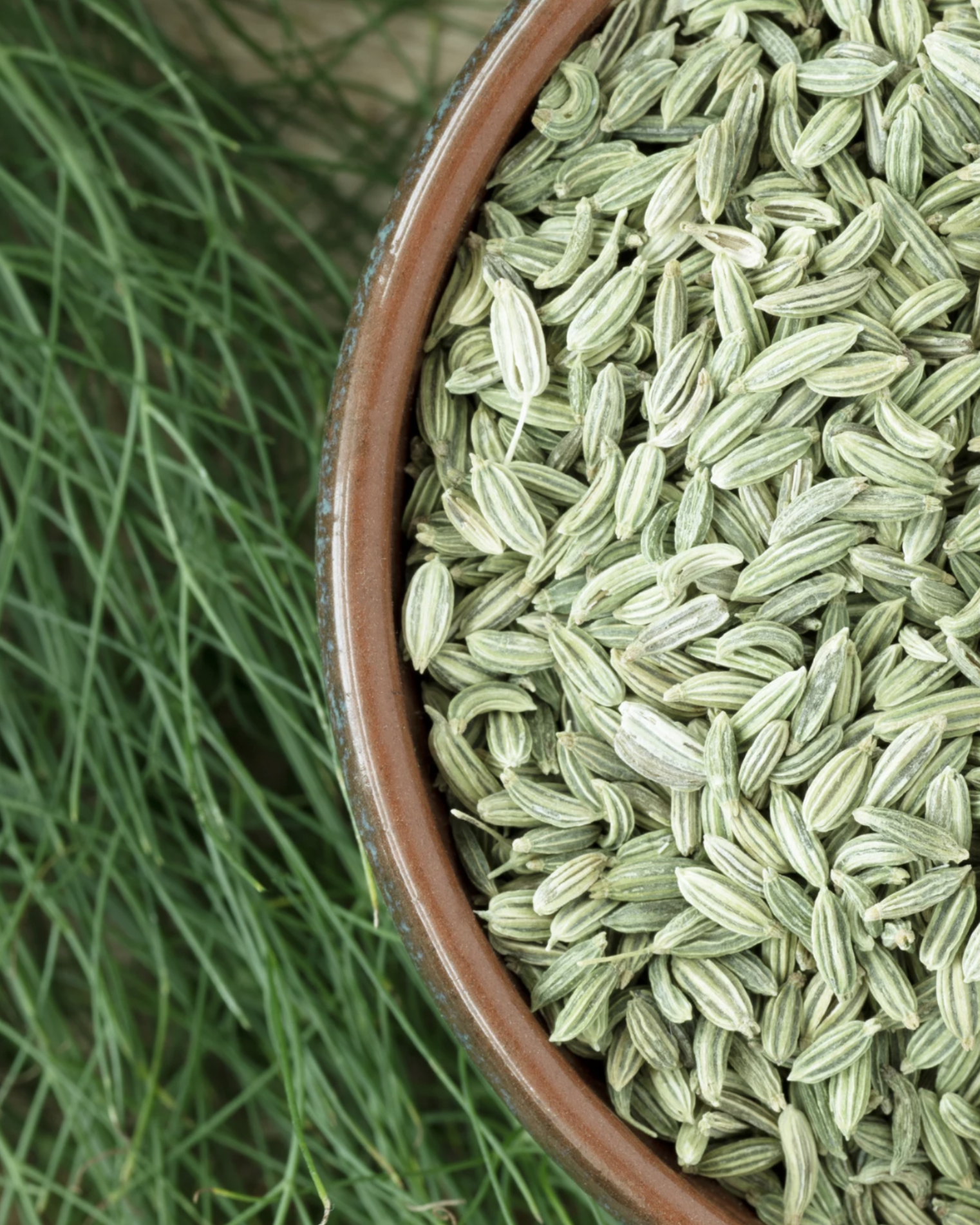
Fennel seeds with fennel fronds in the background