Herbal Deep Dive: Mullein (Verbascum thapsus)
Background Info
Mullein goes by many names; blanket herb, velvet herb, candlewick, old man’s flannel. These are obvious references to the fuzzy looking hairs that cover the mullein leaf. Those small hairs can irritate the throat or the mouth, so be sure to filter when making mullein preparations!
Mullein can be found all over, especially on distressed soil or on the sides of roads. It’s a biennial that produces a rosette of leaves at the base of the plant. During the second year of growth, the flower spike shoots up in the middle of that rosette, and can grow up to 8 feet tall. The stalk is covered with five-petaled, yellow flowers. Historically, the stalk has been dried and used as a torch or tinder.
Mullein is most well known for its mucilage content and is frequently used for respiratory support. It can help loosen mucus, soothe a dry cough, calm a spastic cough, and generally support the lungs through infections or congestion. For this purpose, it’s best taken as a tea, a tincture or as smoke. As an example, some Native Americans use mullein in smoke form to relieve asthma and sore throat. It’s not native to the Americas but it’s been here since the Puritans arrived, so there are hundreds of years of historical use among Native and Black communities throughout the continent. It’s definitely a staple ingredient in most of the respiratory supportive remedies I make.
While it’s great for the lungs, I want to focus on mullein’s lesser known qualities and herbal actions. I didn’t know about mullein until I started formally studying herbalism in the 2010s. I got to know the plant well as part of my monthly plant studies, where I make it a point to taste the plant, research the plant’s history, and make various herbal preparations with the it. I was surprised to learn that mullein is used in multiple cultures as a topical remedy since it is anti-inflammatory, astringent, and full of skin soothing mucilage. It’s also thought to have pain relieving and antibacterial properties, with a strong affinity for the lymphatic system.
Plant Uses
First Aid & Skin
Mullein leaf is helpful for inflammation and/or pain occurring on the skin. A mullein infusion, poultice, ointment, or cream can be used to address pain, inflammation, bruises, sores, rashes, sprains, boils, abscesses, and insect bites. The mucilage and astringency of the plant can help heal wounds and relieve any itching. For example, the Cherokee use mullein as a poultice for cuts.
I’ve had great success with clients in the past using a mullein and echinacea (Echinacea angustifolia) compress to resolve a boil or abscess and reduce the pain associated with the swelling. This is probably my favorite way to engage with mullein.
Lymph
I mentioned earlier that mullein has an affinity for the lymphatic system. That means that mullein helps to move the lymph. According to Cleveland Clinic, “the lymphatic system is a network of organs, vessels and tissues that work together to move a colorless, watery fluid (lymph) back into your circulatory system.” Lymph is a vital part of the immune system that help protect from infection, maintain normal fluid levels in the body, and absorb fats and fat soluble vitamins. Unlike the circulatory system, the lymphatic system doesn’t have any “pumps” in the body to keep the lymph moving so movement (physical activity, lymphatic exercises, etc.) and lymphatic support are key to supporting this system. Consider consuming a mullein tea or tincture as a complement to your next lymphatic massage or gua sha session.
Musculoskeletal
Mullein is a great poultice and tea for glandular swelling and rheumatic pain. Because it is anti-inflammatory and pain reliving, mullein is helpful for inflammation in the muscles or joint pain. The mucilage has a moistening, lubricating effect on the membranes that keep our joints moving. Mullein is widely used in Black American folk medicine in this way for arthritis and gout.
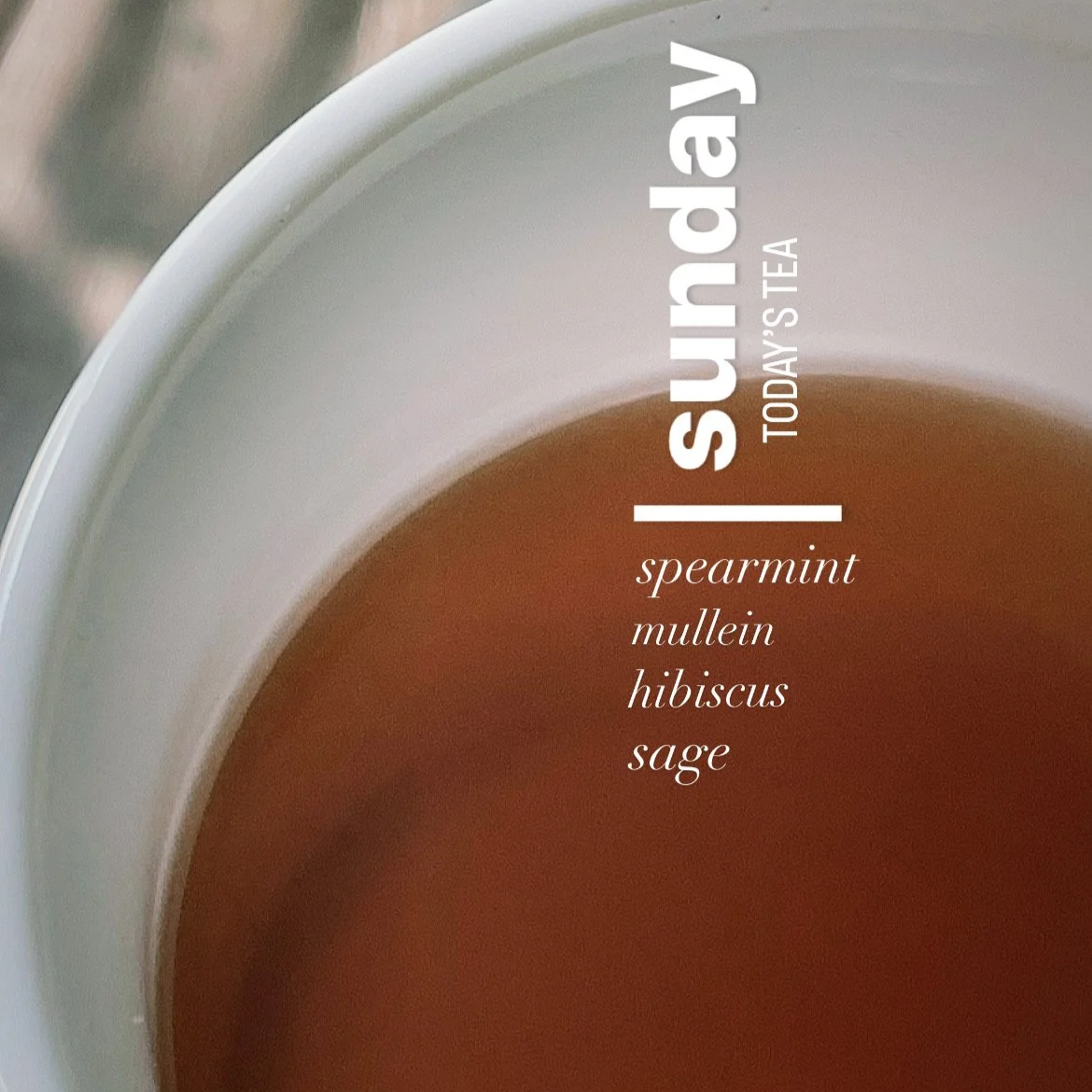
A cold weather tea blend
To make mullein tea, steep 1-2 teaspoons of fresh or dried mullein in 1 cup of water for at least 10 minutes. You can drink this up to three times a day. Use externally as a compress several times a day.
Resources
African American Herbalism by Lucretia VanDyke
Mullein: Herbs of the Week by Commonwealth Herbs https://commonwealthherbs.com/mullein-herb-week/
Lymphatic System by Cleveland Clinic https://my.clevelandclinic.org/health/body/21199-lymphatic-system
Spiritual Herbalism by Karen M. Rose
Making Plant Medicine by Richo Cech
Medicinal Herbs: A Beginner’s Guide - Rosemary Gladstar
Benefits of Mullein and How to Make Mullein Tea. Herbs with Rosalee Podcast. Oct 13, 2021.
Roots of African American Herbalism: Herbal Use by Enslaved Africans by Alyson Morgan on The Herbal Academy Blog https://theherbalacademy.com/blog/african-american-herbalism-history/
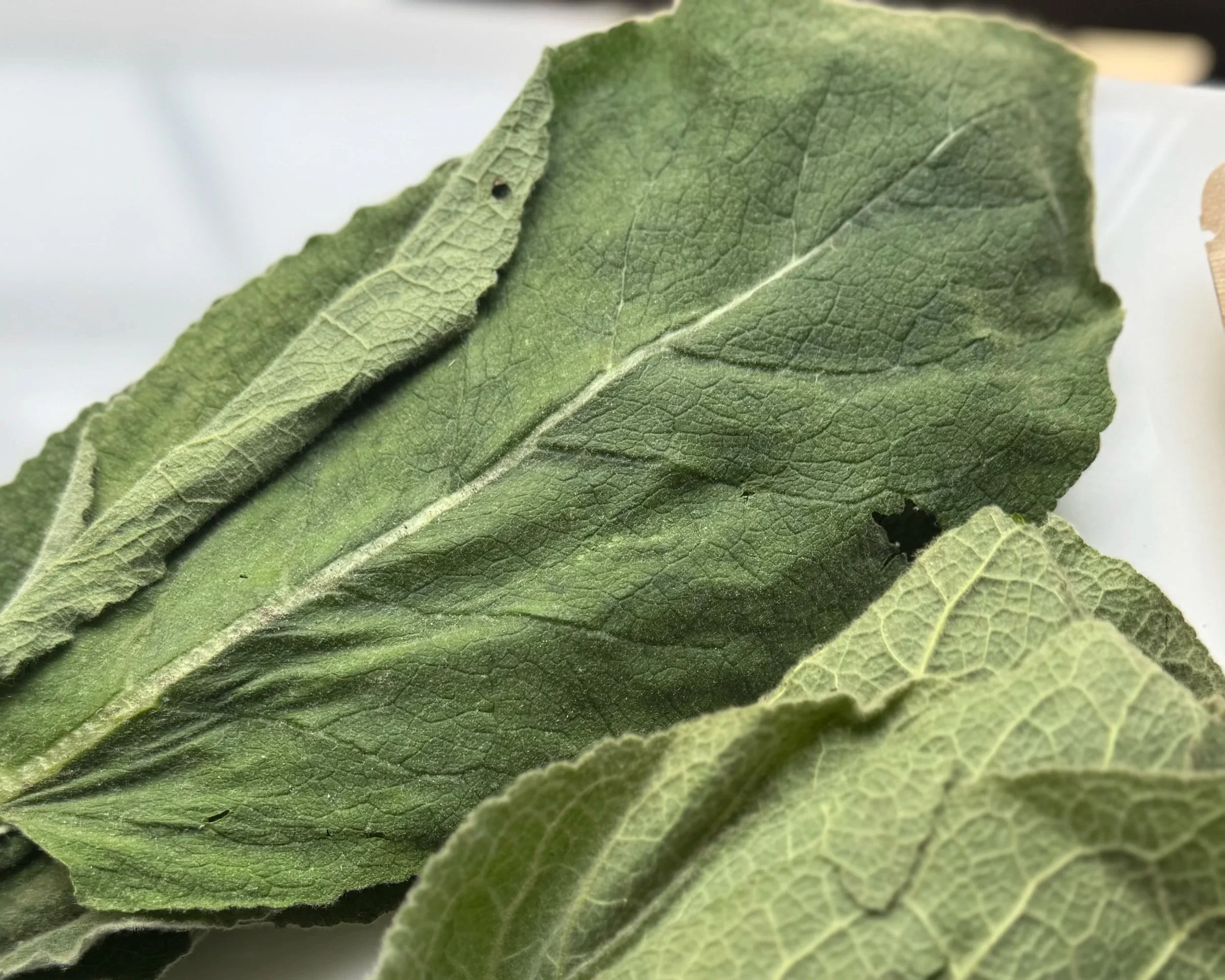
Fresh mullein (Verbascum thapsus) leaf. Look closely to see the tiny hairs!
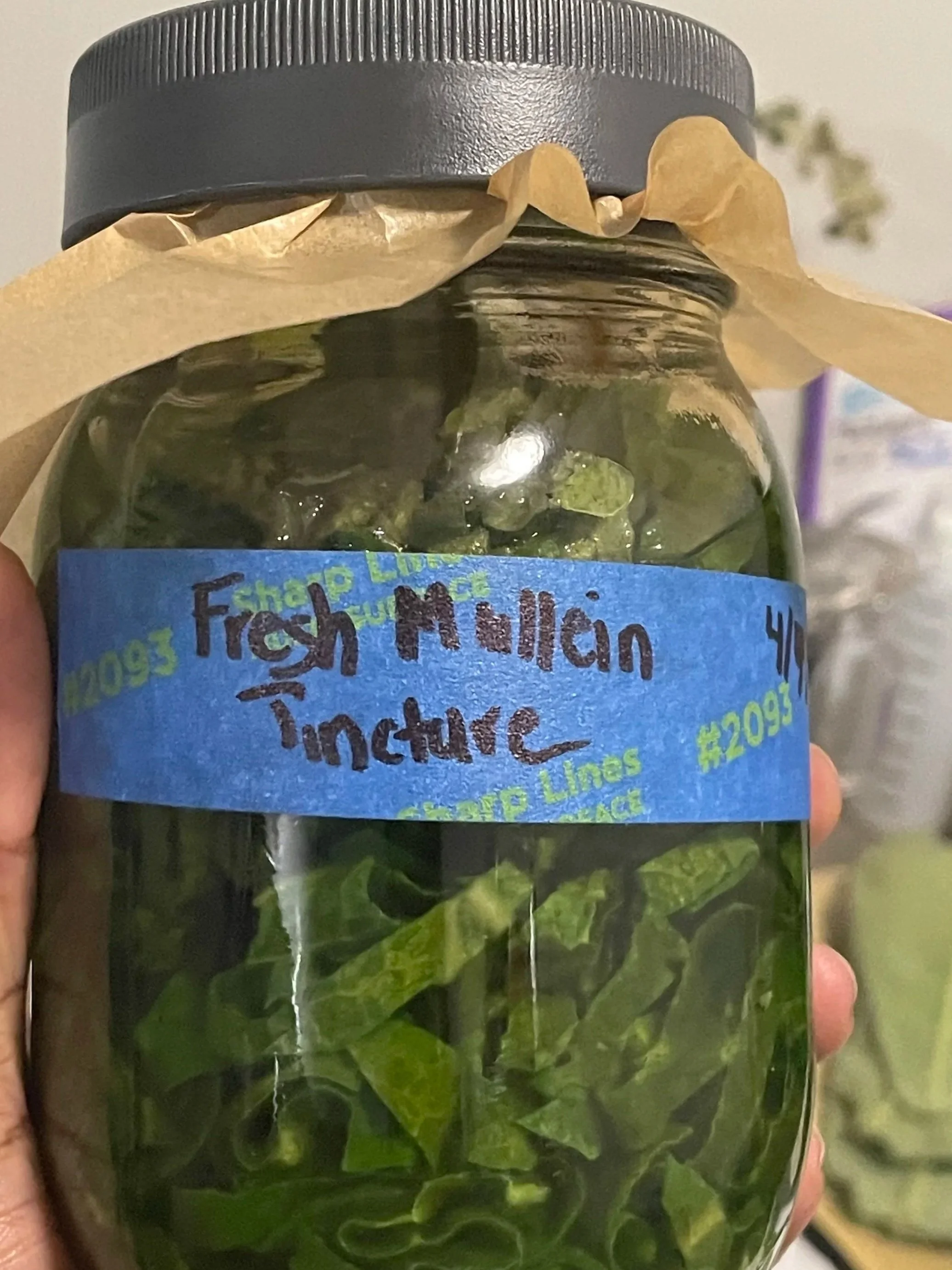
Fresh plant tincture made with locally grown mullein
Safety
Like I mentioned earlier, the small hairs on mullein can be irritating. They are present whether the plant is fresh or dry, so it’s recommended to strain mullein tea, vinegar, honey, etc with a coffee filter before consumption. Because this plant moves lymph, it should only be used externally in people who have cancer. Lastly, mullein leaves contain coumarin, which can pose a problem to anyone who takes blood thinners. Please exercise caution.
Herbal Pairings
Mullein is high in nutrients (calcium, magnesium, vitamin Bs and C), giving it a “salty” taste due to the presence of minerals. It’s also mildly bitter. Because of this, I find that mullein goes well with cinnamon and other chai spices in terms of flavor. For herbal remedies, mullein pairs well with other mucilaginous plants like marshmallow, linden, or hibiscus. For respiratory support, considering pairing mullein with elecampane or yarrow.